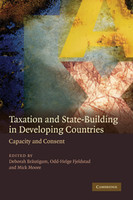

Taxation and State-Building in Developing Countries
There is a widespread concern that, in some parts of the world, governments are unable to exercise effective authority. When governments fail, more sinister forces thrive: warlords, arms smugglers, narcotics enterprises, kidnap gangs, terrorist networks, armed militias. Why do governments fail? This book explores an old idea that has returned to prominence: that authority, effectiveness, accountability and responsiveness is closely related to the ways in which governments are financed. It matters that governments tax their citizens rather than live from oil revenues and foreign aid, and it matters how they tax them. Taxation stimulates demands for representation, and an effective revenue authority is the central pillar of state capacity. Using case studies from Africa, Asia, Eastern Europe and Latin America, this book presents and evaluates these arguments, updates theories derived from European history in the light of conditions in contemporary poorer countries, and draws conclusions for policy-makers.
This book moves away from the orthodox neoliberal paradigm to suggest a new framework linking social policy with citizenship and transformation. The interjection of nation building, public society...