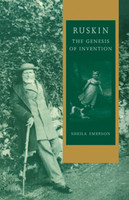
Although John Ruskin is widely considered to have produced some of the greatest prose in English, there has been no extended study of how he learned to write or of the language with which he represents his learning. This book begins with the prodigiously inventive child who looks ahead to what he will achieve, and ends with the adult who looks to his past for proof that he has never been inventive. Far from a simple about-face, Ruskin's self-denial is a culmination and extension of the art that he mastered in youth, and it is one of the most remarkable acts of self-representation in all of Victorian prose. Drawing on Ruskin's own sources as well as on more recent directions in critical theory, Professor Emerson reveals the effects of early literary, familial, sexual and social experiences on the shaping of a major writer's identity.
In this book, Collingwood delves into the life and work of John Ruskin, exploring his philosophy and artistic vision. With a blend of biography, criticism, and personal anecdote, Ruskin Relics offers...
This is an EXACT reproduction of a book published before 1923. This IS NOT an OCR'd book with strange characters, introduced typographical errors, and jumbled words. This book may have occasional...
For many years Ruskin has seemed, at best, a conservative thinker on gender roles. At worst, his lecture On Queens' Gardens from Sesame and Lilies was read as a locus classicus of Victorian...
Ruskin on music is an unchanged, high-quality reprint of the original edition of 1894.Hansebooks is editor of the literature on different topic areas such as research and science, travel and...