Trending Bestseller

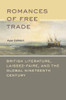
Romances of Free Trade

No reviews yet Write a Review
Drawing on works by Walter Scott, Dickens, Charlotte Bronte, and others, Romances of Free Trade offers a new account of the cultural work of romance in nineteenth-century Britain, arguing that novelists and playwrights employed the genre to represent a radically new historical formation: the emergence of the global free-market economy.
Hardback
25-August-2011
304 Pages
RRP: $304.00
$170.00
In Stock: Ships in 4-6 Working Days
In Stock: Ships in 7-9 Days
Hurry up! Current stock:
Exploring works by Walter Scott, Harriet Martineau, Charlotte Brontë, Charles Dickens, and their lesser-known contemporaries, Romances of Free Trade historicizes globalization as it traces the perception of dissolving borders and declining national sovereignty back into the nineteenth century. The book offers a new account of the cultural work of romance in nineteenth-century Britain. Çelikkol argues that novelists and playwrights employed this genre to represent a radically new historical formation: the emergence of a globalized free-market economy. In previous centuries, the British state had pursued an economic policy that chose domestic goods over foreign ones. Through the first half of the nineteenth century, liberal economists maintained that commodity traffic across national borders should move outside the purview of the state, a position and practice that began to take hold as the century progressed. Amid the transformation, Britons pondered the vertiginous effects of rapidly accelerating economic circulation. Would patriotic attachment to the homeland dissolve along with the preference for domestic goods? How would the nation and the empire fare if commerce became uncontrollable? The literary genre of romance, characterized by protagonists who drift in lawless spaces, played a meaningful role in addressing such pressing questions. From the figure of the smuggler to the episodic plot structure, romance elements in fiction and drama narrated and made tangible the sprawling global markets and fluid capital that were reshaping the world. In addition to clear-eyed close readings of nineteenth-century novels and plays, Çelikkol draws on the era's major economic theorists, figures like Adam Smith and Thomas Malthus, to vividly illustrate the manifold ways the romance genre engaged with these emerging financial changes.

This product hasn't received any reviews yet. Be the first to review this product!

RRP: $304.00
$170.00
In Stock: Ships in 4-6 Working Days
In Stock: Ships in 7-9 Days
Hurry up! Current stock:

Romances of Free Trade

RRP: $304.00
$170.00

Description

Exploring works by Walter Scott, Harriet Martineau, Charlotte Brontë, Charles Dickens, and their lesser-known contemporaries, Romances of Free Trade historicizes globalization as it traces the perception of dissolving borders and declining national sovereignty back into the nineteenth century. The book offers a new account of the cultural work of romance in nineteenth-century Britain. Çelikkol argues that novelists and playwrights employed this genre to represent a radically new historical formation: the emergence of a globalized free-market economy. In previous centuries, the British state had pursued an economic policy that chose domestic goods over foreign ones. Through the first half of the nineteenth century, liberal economists maintained that commodity traffic across national borders should move outside the purview of the state, a position and practice that began to take hold as the century progressed. Amid the transformation, Britons pondered the vertiginous effects of rapidly accelerating economic circulation. Would patriotic attachment to the homeland dissolve along with the preference for domestic goods? How would the nation and the empire fare if commerce became uncontrollable? The literary genre of romance, characterized by protagonists who drift in lawless spaces, played a meaningful role in addressing such pressing questions. From the figure of the smuggler to the episodic plot structure, romance elements in fiction and drama narrated and made tangible the sprawling global markets and fluid capital that were reshaping the world. In addition to clear-eyed close readings of nineteenth-century novels and plays, Çelikkol draws on the era's major economic theorists, figures like Adam Smith and Thomas Malthus, to vividly illustrate the manifold ways the romance genre engaged with these emerging financial changes.

Customers Also Viewed