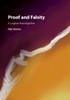

This book argues that the meaning of negation, perhaps the most important logical constant, cannot be defined within the framework of the most comprehensive theory of proof-theoretic semantics, as formulated in the influential work of Michael Dummett and Dag Prawitz. Nils Kürbis examines three approaches that have attempted to solve the problem - defining negation in terms of metaphysical incompatibility; treating negation as an undefinable primitive; and defining negation in terms of a speech act of denial - and concludes that they cannot adequately do so. He argues that whereas proof-theoretic semantics usually only appeals to a notion of truth, it also needs to appeal to a notion of falsity, and proposes a system of natural deduction in which both are incorporated. Offering new perspectives on negation, denial and falsity, his book will be important for readers working on logic, metaphysics and the philosophy of language.
It seems we are awash in information. From the moment we wake until we turn over our phones at night, we are bombarded with images and messages, news and information from a confounding number of...
This book proposes a novel theory of truth and falsity. It argues that truth is a form of reference and falsity is a form of reference failure.Most of the philosophical literature on truth...
Presenting an independent reading on issues of interest, such as Descartes' view on error, truth and falsehood, this book makes important contributions to topics that have been the focus of recent...
This is a reproduction of a book published before 1923. This book may have occasional imperfections such as missing or blurred pages, poor pictures, errant marks, etc. that were either part of the...
This work has been selected by scholars as being culturally important and is part of the knowledge base of civilization as we know it.This work is in the public domain in the United States of...