In the aftermath of colonial mission, Christianity has come to have widespread acceptance in Southern Tanzania. In this book, Maia Green explores contemporary Catholic practice in a rural community of Southern Tanzania. Setting the adoption of Christianity and the suppression of witchcraft in a historical context, she suggests that power relations established during the colonial period continue to hold between both popular Christianity and orthodoxy, and local populations and indigenous clergy. Paradoxically, while local practices around the constitution of kinship and personhood remain defiantly free of Christian elements, they inform a popular Christianity experienced as a system of substances and practices. This book offers a challenge to idealist and interpretative accounts of African participation in twentieth-century religious forms, and argues for a politically grounded analysis of historical processes. It will appeal widely to scholars and students of anthropology, sociology and African Studies; particularly those interested in religion and kinship.
"Her books are among the finest historical novels ever written." - Alison Weir"[O]rgies, spells, and rites . . . a tasty brew!" - Library Journal"This novel by Hilda Lewis is one of the best I have...
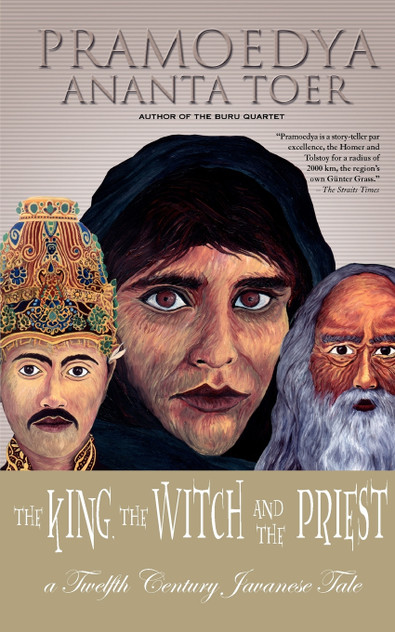
"Centuries ago, there was, in the eastern part of the island of Java, a kingdom by the name of Daha..." So begins The King, the Witch and the Priest, a fable with contemporary allure that is based on...
Ammann's thorough analysis of these two plays offers a new perspective on the portrayal of witchcraft and Catholicism in Restoration-era drama. With meticulous attention to detail, Ammann situates...
This work has been selected by scholars as being culturally important, and is part of the knowledge base of civilization as we know it. This work was reproduced from the original artifact, and...