Between 1934 and 1941 Stalin unleashed what came to be known as the 'Great Terror' against millions of Soviet citizens. The same period also saw the 'Great Retreat', the repudiation of many of the aspirations of the Russian Revolution. The response of ordinary Russians to the extraordinary events of this time has been obscure. Sarah Davies's study uses NKVD and party reports, letters and other evidence to show that, despite propaganda and repression, dissonant public opinion was not extinguished. The people continued to criticise Stalin and the Soviet regime, and complain about particular policies. The book examines many themes, including attitudes towards social and economic policy, the terror, and the leader cult, shedding light on a hugely important part of Russia's social, political, and cultural history.
In 1932 Zara Witkin, a prominent American engineer, set off for the Soviet Union with two goals: to help build a society more just and rational than the bankrupt capitalist system at home, and to...
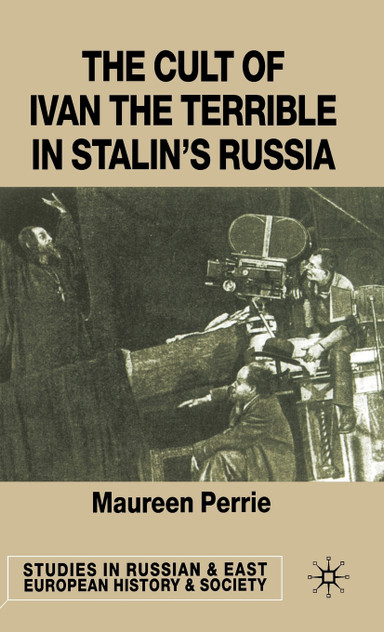
Ivan IV, the 16th-century tsar notorious for his reign of terror, became an unlikely national hero in the Soviet Union during the 1940s. This book traces the development of Ivan's positive image,...
This work has been selected by scholars as being culturally important, and is part of the knowledge base of civilization as we know it.This work is in the "public domain in the United States of...
The Making of the Modern Law: Legal Treatises, 1800-1926 includes over 20,000 analytical, theoretical and practical works on American and British Law. It includes the writings of major legal...