
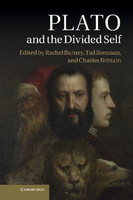
Plato's account of the tripartite soul is a memorable feature of dialogues like the Republic, Phaedrus and Timaeus: it is one of his most famous and influential yet least understood theories. It presents human nature as both essentially multiple and diverse - and yet somehow also one - divided into a fully human 'rational' part, a lion-like 'spirited part' and an 'appetitive' part likened to a many-headed beast. How these parts interact, how exactly each shapes our agency and how they are affected by phenomena like erôs and education is complicated and controversial. The essays in this book investigate how the theory evolves over the whole of Plato's work, including the Republic, Phaedrus and Timaeus, and how it was developed further by important Platonists such as Galen, Plutarch and Plotinus. They will be of interest to a wide audience in philosophy and classics.
This book argues that, rather than being conceived merely as a hindrance, the body contributes constructively in the fashioning of a Platonic unified self. The Phaedo shows awareness that the...
Plato's dialogues were part of a body of fourth-century literature in which Socrates questioned (and usually got the better of) friends, associates, and supposed experts. A. G. Long considers how...