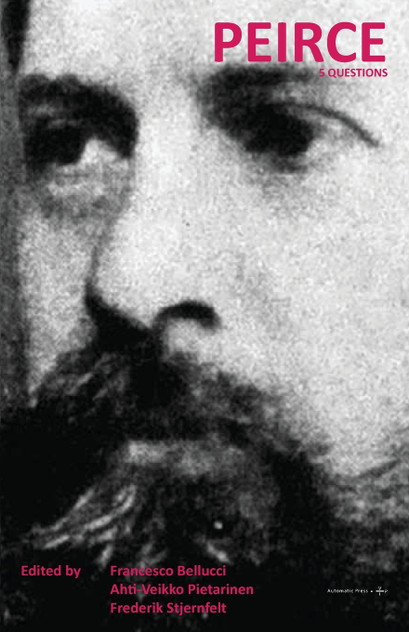
Charles Sanders Peirce (1839-1914) is regarded as the founding father of pragmatism and a key figure in the development of American philosophy, yet his practical philosophy remains under-acknowledged and misinterpreted. In this book, Richard Atkins argues that Peirce did in fact have developed and systematic views on ethics, on religion, and on how to live, and that these views are both plausible and relevant. Drawing on a controversial lecture that Peirce delivered in 1898 and related works, he examines Peirce's theories of sentiment and instinct, his defence of the rational acceptability of religious belief, his analysis of self-controlled action, and his pragmatic account of practical ethics, showing how he developed his views and how they interact with those of his great contemporary William James. This study will be essential for scholars of Peirce and for those interested in American philosophy, pragmatism, the philosophy of religion, the philosophy of action, and ethics.
This collection of essays was published originally in 1860, just before the American Civil War. In it, philosopher Ralph Waldo Emerson turns toward pragmatism and focuses on the practical application...
This work has been selected by scholars as being culturally important and is part of the knowledge base of civilization as we know it.This work is in the public domain in the United States of...
This work has been selected by scholars as being culturally important, and is part of the knowledge base of civilization as we know it.This work is in the "public domain in the United States of...
On April 19, 1914, the American philosopher Charles Sanders Peirce died. He had not held an academic position since 1883 and had lived the last third of his life in financial distress, increasingly...