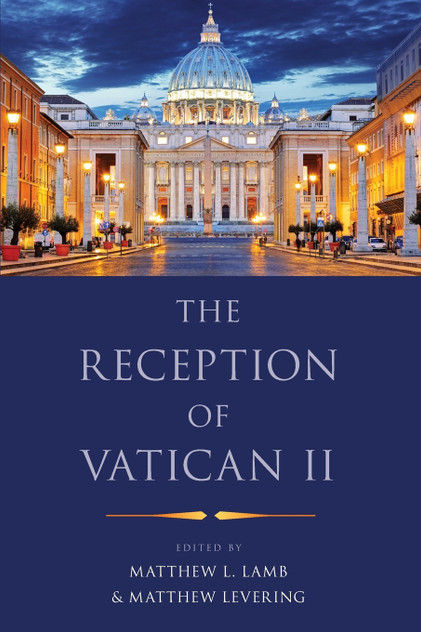
President de Gaulle famously called the Second Vatican Council 'the greatest event of the twentieth century'. Vatican II established a landmark not only in Roman Catholic theology, ethics and worship, but also in its ecclesiology and ecumenical relationships with other traditions. Commentators at the time saw the council as nothing short of revolutionary and the later judgements of historians have upheld this view. A defining dimension of Vatican II was the presence of a number of observers invited by John XXIII to represent other traditions and to report the workings of the Council to their own leaders. But it was often felt that they exerted influence, too. The Archbishop of Canterbury employed a representative at the Vatican Council, Bernard Pawley. Pawley's confidential reports and correspondence have often been quoted in secondary studies, and have achieved a considerable academic stature. This book makes them available to scholars, churches and the public.
Vatican I and Vatican II represent two of the three ecumenical councils in modern times, yet relatively few studies have sought to understand their relation to one another. In fact, the councils are...
The purpose of this study is to show that the formal definition of the spiritual Motherhood of Mary would constitute a doctrinal development from Vatican II's teaching on Mary. It is my strong view...
Marking the 60th anniversary of the Second Vatican Council (1962-65) here are original essays by leading Catholic theological scholars. They address the historic and current significance of the...
From 1962 to 1965, in perhaps the most important religious event of the twentieth century, the Second Vatican Council met to plot a course for the future of the Roman Catholic Church. After thousands...