
Trending Bestseller

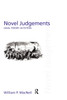
Novel Judgements

Legal Theory as Fiction
No reviews yet Write a Review
Paperback / softback
07 September 2011
$90.28
Ships in 3-5 business days
Hurry up! Current stock:

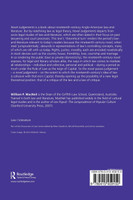
Novel Judgements is a book about nineteenth century Anglo-American law and literature. But by redefining law as legal theory, Novel judgements departs from 'socio-legal' studies of law and literature, often dated in their focus on past lawyering and court processes. This texts 'theoretical turn' renders the period's 'law-and-literature' relevant to today's readers because the nineteenth century novel, when "read jurisprudentially", abounds in representations of law's controlling concepts, many of which are still with us today. Rights, justice, law's morality; each are encoded novelistically in stock devices such as the country house, friendship, love, courtship and marriage. In so rendering the public (law) as private (domesticity), these novels expose for legal and literary scholars alike the ways in which law comes to mediate all relationships-individual and collective, personal and political-during the nineteenth century, a period as much under the Rule of Law as the reign of Capital. So these novels pass judgement-a novel judgement-on the extent to which the nineteenth century's idea of law is collusive with that era's Capital, thereby opening up the possibility of a new legal theoretical position: that of a critique of the law and a law of critique.

You Can Find This Book In

    Book Details
    ISBN-13
    9780415459150
    Author
    William P. MacNeil
    Publisher
    Taylor & Francis Ltd
    Published
    07 September 2011
    Format
    Paperback / softback

    This product hasn't received any reviews yet. Be the first to review this product!

    $90.28
    Ships in 3-5 business days
    Hurry up! Current stock:

    Novel Judgements

    $90.28

    Description

    Novel Judgements is a book about nineteenth century Anglo-American law and literature. But by redefining law as legal theory, Novel judgements departs from 'socio-legal' studies of law and literature, often dated in their focus on past lawyering and court processes. This texts 'theoretical turn' renders the period's 'law-and-literature' relevant to today's readers because the nineteenth century novel, when "read jurisprudentially", abounds in representations of law's controlling concepts, many of which are still with us today. Rights, justice, law's morality; each are encoded novelistically in stock devices such as the country house, friendship, love, courtship and marriage. In so rendering the public (law) as private (domesticity), these novels expose for legal and literary scholars alike the ways in which law comes to mediate all relationships-individual and collective, personal and political-during the nineteenth century, a period as much under the Rule of Law as the reign of Capital. So these novels pass judgement-a novel judgement-on the extent to which the nineteenth century's idea of law is collusive with that era's Capital, thereby opening up the possibility of a new legal theoretical position: that of a critique of the law and a law of critique.

    You Can Find This Book In

      This Book Is Categorised As