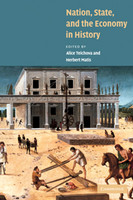
Originally published in 2003, this book addresses the rarely explored subject of the reciprocal relationships between nationalism, nation and state-building, and economic change. Analysis of the economic element in the building of nations and states cannot be confined to Europe, and therefore these diverse yet interlinked case-studies cover all continents. Authors come to contrasting conclusions, some regarding the economic factor as central, while others show that nation-states came into being before the constitution of a national market. The essays leave no doubt that the nation-state is an historical phenonemon and as such is liable to 'expiry' both through the process of globalisation and through the development of a 'cyber-society' which evades state control. By contrast, developments in southeastern Europe, the former USSR, and parts of Africa and the Far East show that building the nation-state has not run its course.
The study of Arab historiography and of the emergence of the Arab nation-state as an object of historical treatment is a matter of considerable current interest. Despite its importance, no academic...
The implications of globalization for labour are more often asserted than analyzed. This collection, and its companion volume Globalization and Patterns of Labour Resistance edited by Jeremy...
This work has been selected by scholars as being culturally important, and is part of the knowledge base of civilization as we know it.This work is in the "public domain in the United States of...