Trending Bestseller

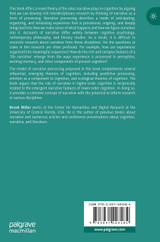
Narrative and Cognition in Literature and Science

No reviews yet Write a Review
What would a narratology of science look like? A narratology of science-in-literature? How might principles of cognition bring narrative and science together? Narrative is a fundamental mode of thought and meaning-making. Science is a central, more
Hardback
07 July 2025
$91.00
Ships in 5–7 business days
Hurry up! Current stock:
This volume explores cognitive perspectives on how science and narrative shape one another. Narrative is a principle of cognition, and cognition is fundamental to narrative. This duality enables a deeper mapping of the feedback between story and the natural sciences. Science, as a culturally-organized and systematic mode of knowing the world, may seem opposed to narrative thinking. Yet they are deeply interwoven. Scientists tell many kinds of stories, across genres and media. In thought experiments, lab experiments, written arguments, and histories and philosophies of fields, they recount and interpret unfoldings of events at often uncanny scales-from particle collisions to the evolution of life to cosmic expansion. Science stories go beyond science. Early science is entwined with myth, religion and magic. We still mythologize beneficent or evil geniuses, the promises and perils of technology. Teachers, journalists, politicians and lawyers all tell science stories for their own purposes. Literary artists use scientific ideas and forms, reimagining physical forces, causality and time in storyworlds, themes and figures. This is the first cognition-focused multi-disciplinary analysis of these narrative-science relations.

This product hasn't received any reviews yet. Be the first to review this product!

$91.00
Ships in 5–7 business days
Hurry up! Current stock:

Narrative and Cognition in Literature and Science

$91.00

Description

This volume explores cognitive perspectives on how science and narrative shape one another. Narrative is a principle of cognition, and cognition is fundamental to narrative. This duality enables a deeper mapping of the feedback between story and the natural sciences. Science, as a culturally-organized and systematic mode of knowing the world, may seem opposed to narrative thinking. Yet they are deeply interwoven. Scientists tell many kinds of stories, across genres and media. In thought experiments, lab experiments, written arguments, and histories and philosophies of fields, they recount and interpret unfoldings of events at often uncanny scales-from particle collisions to the evolution of life to cosmic expansion. Science stories go beyond science. Early science is entwined with myth, religion and magic. We still mythologize beneficent or evil geniuses, the promises and perils of technology. Teachers, journalists, politicians and lawyers all tell science stories for their own purposes. Literary artists use scientific ideas and forms, reimagining physical forces, causality and time in storyworlds, themes and figures. This is the first cognition-focused multi-disciplinary analysis of these narrative-science relations.

Customers Also Viewed