Monitoring in Coastal Environments Using Foraminifera and Thecamoebian Indicators
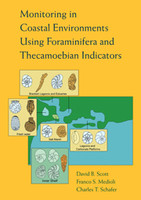
Foraminifera and thecamoebians are highly sensitive to environmental stress (natural or anthropogenic). This feature means that they can be used to biologically characterize a variety of freshwater and coastal marine environments. Due to their small size and hard shells, large quantities are also found fossilised in core samples, making them ideal for reconstructing past environmental conditions. This volume covers the specific environmental applications of these organisms and contains an introduction to the subject, detailed descriptions of methods and techniques and case studies. Written for non-specialists, this book will appeal to resource managers and consultants in the public and private sector who routinely work on coastal environmental problems. The book will also serve as a supplementary text for graduate students in many courses on environmental monitoring, ecological baseline studies and environmental science.
This work has been selected by scholars as being culturally important, and is part of the knowledge base of civilization as we know it.This work is in the "public domain in the United States of...
Various environmental issues are related to urban activities. Through the growing recognition of the necessity to develop sustainable urban mana- ment, the University of Tokyo established the Center...
This research paper offers important insights into the evolution and distribution of planktonic foraminifera in the Pliocene and Miocene eras. Cushman's detailed analysis of the samples from the...
As the coastal human population increases in the United States, there will likely be increasing environmental and socioeconomic pressures on our coastal and estuarine environments. Monitoring the ...
This work has been selected by scholars as being culturally important and is part of the knowledge base of civilization as we know it.This work is in the public domain in the United States of...