Trending Bestseller

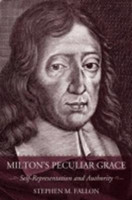
Milton's Peculiar Grace

Stephen M. Fallon

No reviews yet Write a Review
Paperback / softback
296 Pages
$93.00
Ships in 3-5 business days
Hurry up! Current stock:

Despite writing about himself extensively and repeatedly, John Milton, the archetypal Puritan author, resolutely avoids the obligatory Augustinian narrative of sinfulness, conviction of sin, reception of the Word, regeneration of the spirit, and sanctification. The doctrine of fall, grace, and regeneration, so well illustrated in Paradise Lost, has no discernible effect on Milton's overt self-representations. Exploring this anomaly in his new book, Stephen M. Fallon contends that Milton, despite his deep engagement with theology, is not a religious writer.Why, Fallon asks, does Milton write about himself so compulsively? Why does he substitute, for the otherwise universal theological script, a story of precocious and continued virtue, even, it seems, a narrative of sinlessness? What pressures does this decision to reject the standard narrative exert on his work?In Milton's Peculiar Grace, Fallon argues that Milton writes about himself to gain immortality, secure authority for his arguments, and exert control over his readers' interpretations. He traces the return of the repressed narrative of fallenness in the author's unacknowledged and displaced self-representations, which in turn account for much of the power of the late poems. Fallon's book, based on close readings of Milton's ""self-constructions"" in prose and poetry throughout his career, provides a new view of Milton's life and his importance for contemporary literary theory-in particular for continued questions about authorial intention.To listen to a radio interview with Stephen Fallon discussing Milton's enduring significance, on the Australian Broadcasting Company's ""Late Night Live,"" click here.

"

This product hasn't received any reviews yet. Be the first to review this product!

$93.00
Ships in 3-5 business days
Hurry up! Current stock:

Milton's Peculiar Grace

$93.00

Description

Despite writing about himself extensively and repeatedly, John Milton, the archetypal Puritan author, resolutely avoids the obligatory Augustinian narrative of sinfulness, conviction of sin, reception of the Word, regeneration of the spirit, and sanctification. The doctrine of fall, grace, and regeneration, so well illustrated in Paradise Lost, has no discernible effect on Milton's overt self-representations. Exploring this anomaly in his new book, Stephen M. Fallon contends that Milton, despite his deep engagement with theology, is not a religious writer.Why, Fallon asks, does Milton write about himself so compulsively? Why does he substitute, for the otherwise universal theological script, a story of precocious and continued virtue, even, it seems, a narrative of sinlessness? What pressures does this decision to reject the standard narrative exert on his work?In Milton's Peculiar Grace, Fallon argues that Milton writes about himself to gain immortality, secure authority for his arguments, and exert control over his readers' interpretations. He traces the return of the repressed narrative of fallenness in the author's unacknowledged and displaced self-representations, which in turn account for much of the power of the late poems. Fallon's book, based on close readings of Milton's ""self-constructions"" in prose and poetry throughout his career, provides a new view of Milton's life and his importance for contemporary literary theory-in particular for continued questions about authorial intention.To listen to a radio interview with Stephen Fallon discussing Milton's enduring significance, on the Australian Broadcasting Company's ""Late Night Live,"" click here.

"

Customers Also Viewed