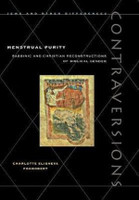
This book offers a new perspective on rabbinic discussions of menstrual impurity, female physiology, and anatomy, and on the social and religious institutions those discussions engendered. It analyzes the functions of these discussions within the larger textual world of rabbinic literature and in the context of Jewish and Christian culture in late antiquity. The author argues that the architectural metaphors deployed to describe female anatomy operated culturally to associate women with the home and exclude them from rabbinic study halls. Talmudic discussions can be analyzed, however, to allow alternative gender perspectives to emerge, indicating that women and their bodies were not completely objectified. The book concludes with a study of early Christian texts that relate to the same biblical laws on menstrual impurity as rabbinic texts. This text allows us to reconstruct women's perspectives on the inscription of religious meaning onto their bodies and physiological processes.