Louis D. Brandeis and the Making of Regulated Competition, 1900-1932
This book provides an innovative interpretation of industrialization and statebuilding in the United States. Whereas most scholars cast the politics of industrialization in the progressive era as a narrow choice between breaking up and regulating the large corporation, Berk reveals a third way: regulated competition. In this framework, the government steered economic development away from concentrated power by channeling competition from predation to improvements in products and production processes. Louis Brandeis conceptualized regulated competition and introduced it into public debate. Political entrepreneurs in Congress enacted many of Brandeis's proposals into law. The Federal Trade Commission enlisted business and professional associations to make it workable. The commercial printing industry showed how it could succeed. And 30 percent of manufacturing industries used it to improve economic performance. In order to make sense of regulated competition, Berk provides an original theory of institutions he calls 'creative syncretism'.
This work has been selected by scholars as being culturally important, and is part of the knowledge base of civilization as we know it.This work is in the "public domain in the United States of...
Many of the earliest books, particularly those dating back to the 1900s and before, are now extremely scarce and increasingly expensive. We are republishing these classic works in affordable, high...
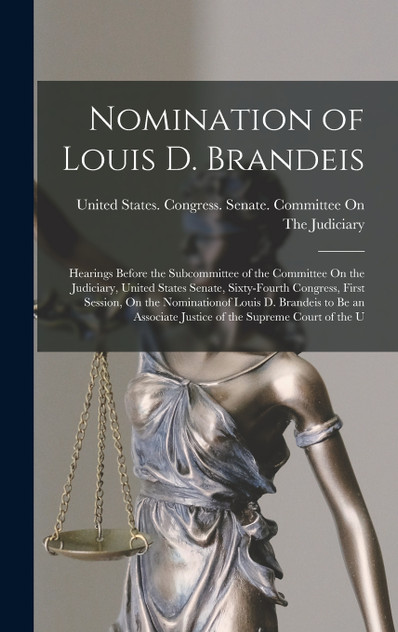
A collection of speeches and statements by American lawyer and Supreme Court Justice Louis Brandeis, who was a prominent supporter of the Zionist movement and the establishment of a Jewish homeland...