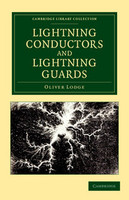

As a result of being asked to give public lectures on the subject, the eminent physicist Oliver Lodge (1851-1940) published in 1892 a pioneering study of the protection of buildings, cables and telegraphic instruments from the devastation caused by lightning strikes. This work led him almost immediately to the discovery of electromagnetic wave transmission and ultimately to the development of a version of radio telegraphy. Lodge also saw that many of the current theories about the nature of lightning were seriously in error, and his investigations led to a number of significant changes in the design of lightning conductors and lightning guards. Some of the methods and procedures that Lodge advocated have since become standard practice. They are described with Lodge's characteristic flair and accompanied by a wealth of illustrations that give a fascinating insight into how contemporary scientists and engineers tackled this significant problem.
This is a reproduction of a book published before 1923. This book may have occasional imperfections such as missing or blurred pages, poor pictures, errant marks,...
This work has been selected by scholars as being culturally important, and is part of the knowledge base of civilization as we know it. This work was reproduced from the original artifact, and...
This is a reproduction of a book published before 1923. This book may have occasional imperfections such as missing or blurred pages, poor pictures,...
Originally published in 1905, this delightful novel tells the story of a motor-car named Sylvia and her adventures throughout the English countryside. Along the way, she encounters a variety of...
This book is a groundbreaking study of the design and installation of lightning conductors for the protection of buildings and other structures. Hedges, a leading expert on electrostatics and...