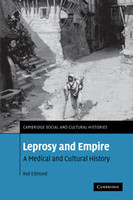
An innovative, interdisciplinary study of why leprosy, a disease with a very low level of infection, has repeatedly provoked revulsion and fear. Rod Edmond explores, in particular, how these reactions were refashioned in the modern colonial period. Beginning as a medical history, the book broadens into an examination of how Britain and its colonies responded to the believed spread of leprosy. Across the empire this involved isolating victims of the disease in 'colonies', often on offshore islands. Discussion of the segregation of lepers is then extended to analogous examples of this practice, which, it is argued, has been an essential part of the repertoire of colonialism in the modern period. The book also examines literary representations of leprosy in Romantic, Victorian and twentieth-century writing, and concludes with a discussion of traveller-writers such as R. L. Stevenson and Graham Greene who described and fictionalised their experience of staying in a leper colony.
Delve into the fascinating history and science of leprosy with this comprehensive guide. Drawing on a wide range of primary sources, as well as the latest medical research, this book provides a...
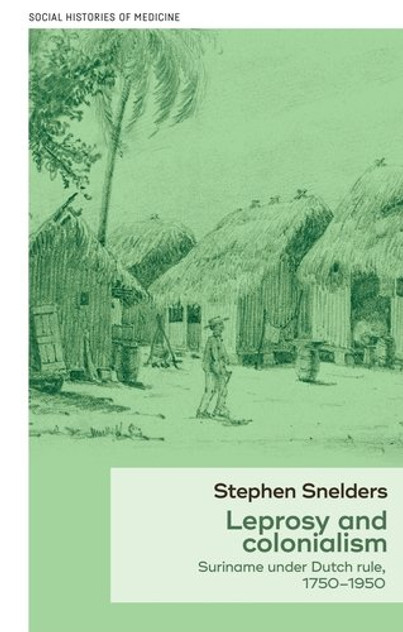
Leprosy and colonialism investigates the history of leprosy in Suriname within the context of Dutch colonial power and racial conflict, from the plantation economy and the age of slavery to the...
This work has been selected by scholars as being culturally important, and is part of the knowledge base of civilization as we know it.This work is in the "public domain in the United States of...
Die Arbeit besteht aus chemischen (Brix, Verhältnis) und physikalischen (Durchmesser, Gewicht) Analysen in Abhängigkeit vom Schweregrad der Zitruslepra. Zur Bewertung der Vektorkontrolle wurden zwei...
This work has been selected by scholars as being culturally important, and is part of the knowledge base of civilization as we know it.This work is in the "public domain in the United States of...