Trending Bestseller

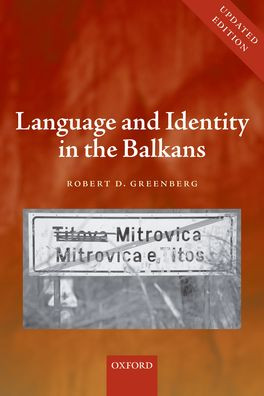
Language and Indentity In The Balkans

No reviews yet Write a Review
After Yugoslavia collapsed in 1991 Serbo-Croatian disintegrated. Using his first-hand observations before and after communism Robert Greenberg describes how the languages of Croatia, Bosnia, Kosovo, Serbia, and Montenegro came into being and shows how their genesis reflects ethnic, religious, and political identity.
Hardback
01-February-2004
$339.00
Ships in 5–7 business days
Hurry up! Current stock:
Language rifts in the Balkans are endemic and have long been both a symptom of ethnic animosity and a cause for inflaming it. But the break-up of the Serbo-Croatian language into four languages on the path towards mutual unintelligibility within a decade is, by any previous standard of linguistic behaviour, extraordinary. Robert Greenberg describes how it happened. Basing his account on first-hand observations in the region before and since the communist demise, he evokes the drama and emotional discord as different factions sought to exploit, prevent, exacerbate, accelerate or just make sense of the chaotic and unpredictable language situation. His fascinating account offers insights into the nature of language change and the relation between language and identity. It also provides a uniquely vivid perspective on nationalism and identity politics in the former Yugoslavia.

This product hasn't received any reviews yet. Be the first to review this product!

$339.00
Ships in 5–7 business days
Hurry up! Current stock:

Language and Indentity In The Balkans

$339.00

Description

Language rifts in the Balkans are endemic and have long been both a symptom of ethnic animosity and a cause for inflaming it. But the break-up of the Serbo-Croatian language into four languages on the path towards mutual unintelligibility within a decade is, by any previous standard of linguistic behaviour, extraordinary. Robert Greenberg describes how it happened. Basing his account on first-hand observations in the region before and since the communist demise, he evokes the drama and emotional discord as different factions sought to exploit, prevent, exacerbate, accelerate or just make sense of the chaotic and unpredictable language situation. His fascinating account offers insights into the nature of language change and the relation between language and identity. It also provides a uniquely vivid perspective on nationalism and identity politics in the former Yugoslavia.

Customers Also Viewed