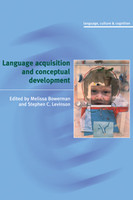
Recent years have seen a revolution in our knowledge of how children learn to think and speak. In this volume, leading scholars from these rapidly evolving fields of research examine the relationship between child language acquisition and cognitive development. At first sight, advances in the two areas seem to have moved in opposing directions: the study of language acquisition has been especially concerned with diversity, explaining how children learn languages of widely different types, while the study of cognitive development has focused on uniformity, clarifying how children build on fundamental, presumably universal concepts. This book brings these two vital strands of investigation into close dialogue, suggesting a synthesis in which the process of language acquisition may interact with early cognitive development. It provides empirical contributions based on a variety of languages, populations and ages, and theoretical discussions that cut across the disciplines of psychology, linguistics and anthropology.
This book deals with the development of modality from a crosslinguistic perspective and is closely related to two earlier volumes on the development of verb and nominal inflection in first language...
Seminar paper from the year 2006 in the subject English Language and Literature Studies - Linguistics, grade: 1,3, University of Duisburg-Essen, course: Language and the Mind, language: English,...
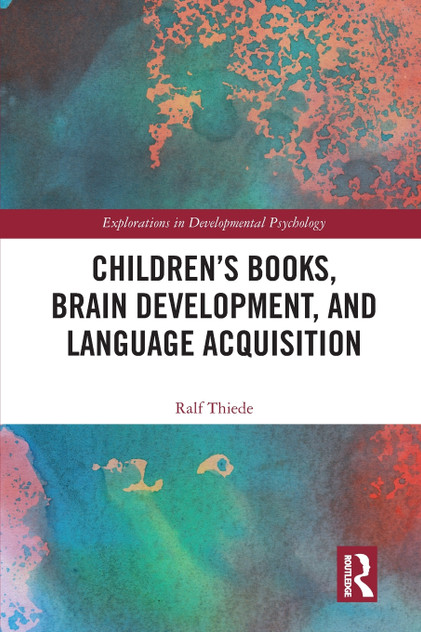
This book correlates English-speaking children's brain development and acquisition of language with the linguistic input that comes from children's books. Drawing from the most current research on...