Cranborne Chase, in central southern England, is the area where British field archaeology developed in its modern form. The site of General Pitt Rivers' pioneering excavations in the nineteenth century, Cranborne Chase also provides a microcosm of virtually all the major types of filed monument present in southern England as a whole. Much of the archaeological material has fortuitously survived, offering the fullest chronological cover of any part of the prehistoric British landscape. Martin Green began working in this region in 1968 and was joined by John Barrett and Richard Bradley in 1977 for a fuller programme of survey and excavation that lasted for nearly ten years. In this important study, they apply some of the questions in prehistory to one of the first regions of the country to be studied in such detail. The book is a regional study of long-term change in British prehistory, and contains a unique collection of data. A landmark in the archaeological literature, it will be essential reading for students and scholars of British prehistory and social and historical geography, and also for all those involved with archaeological methods.
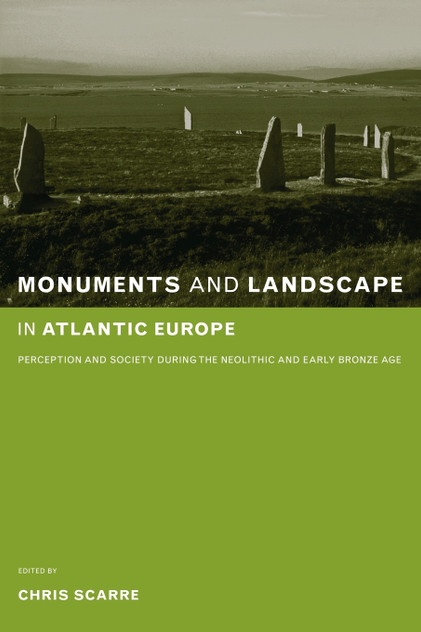
Atlantic Europe is the zone par excellence of megalithic monuments, which encompass a wide range of earthen and stone constructions from inpressive stone circles to modest chambered tombs. A single...
This work has been selected by scholars as being culturally important, and is part of the knowledge base of civilization as we know it.This work is in the "public domain in the United States of...
""History of the Washington National Monument and of the Washington National Monument Society"" is a book written by Frederick Loviad Harvey and published in 1902. The book provides a comprehensive...