Many of the assumptions that underpin mainstream macroeconomic models have been challenged as a result of the traumatic events of the recent financial crisis. Thus, until recently, it was widely agreed that although the stock of money had a role to play, in practice it could be ignored as long as we used short-term nominal interest rates as the instrument of policy because money and other credit markets would clear at the given policy rate. However, very early on in the financial crisis interest rates effectively hit zero percent and so central banks had to resort to a wholly new set of largely untested instruments to restore order, including quantitative easing and the purchase of toxic financial assets. This book brings together contributions from economists working in academia, financial markets and central banks to assess the effectiveness of these policy instruments and explore what lessons have so far been learned.
This work has been selected by scholars as being culturally important, and is part of the knowledge base of civilization as we know it.This work is in the "public domain in the United States of...
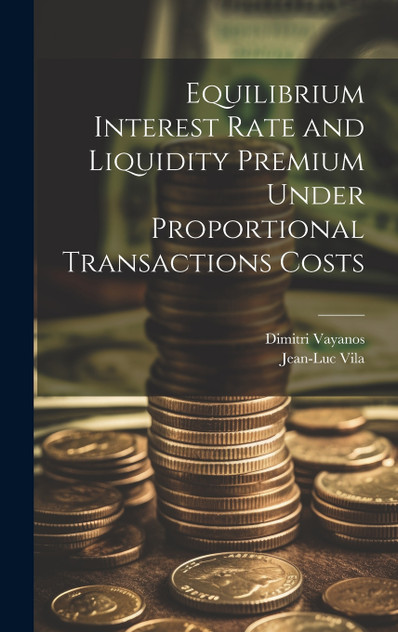
This book analyzes the relationship between the interest rate and the liquidity premium in financial markets with transaction costs. It offers insights for policymakers, investors, and researchers...
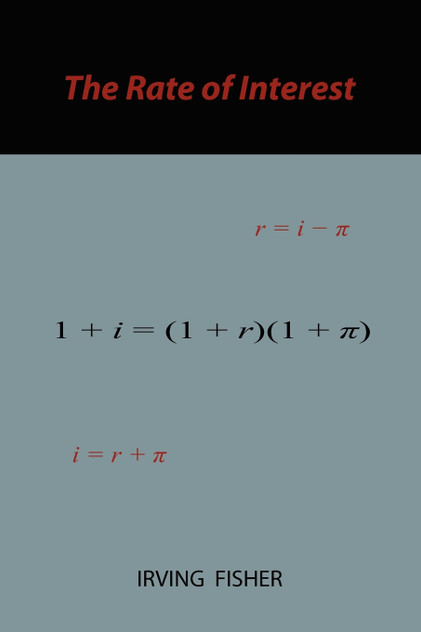
2009 Reprint of the 1907 edition. Paperback, 442pp. Irving Fisher (1867-1947) was an American economist, health campaigner, and eugenicist, and one of the earliest American neoclassical economists...