Recent progress in the theory and computation of electronic structure is bringing an unprecedented level of capability for research. Many-body methods are becoming essential tools vital for quantitative calculations and understanding materials phenomena in physics, chemistry, materials science and other fields. This book provides a unified exposition of the most-used tools: many-body perturbation theory, dynamical mean field theory and quantum Monte Carlo simulations. Each topic is introduced with a less technical overview for a broad readership, followed by in-depth descriptions and mathematical formulation. Practical guidelines, illustrations and exercises are chosen to enable readers to appreciate the complementary approaches, their relationships, and the advantages and disadvantages of each method. This book is designed for graduate students and researchers who want to use and understand these advanced computational tools, get a broad overview, and acquire a basis for participating in new developments.
Nanostructures are among the most actively studied systems in present day - search. Theoretical and experimental studies of these small systems have unc- ered remarkable phenomena due to fundamental...
In the excitement and rapid pace of developments, writing pedagogical texts has low priority for most researchers. However, in transforming my lecture l notes into this book, I found a personal...
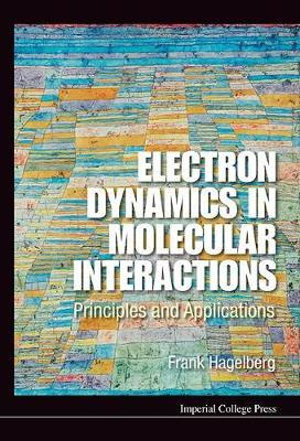
This volume provides a comprehensive introduction to the theory of electronic motion in molecular processes - an increasingly relevant and rapidly expanding segment of molecular quantum dynamics...