Intellectuals and the Search for National Identity in Twentieth-Century Brazil
This book discusses twentieth-century Brazilian political thought, arguing that while Rio de Janeiro intellectuals envisaged the state and the national bourgeoisie as the means to overcome dependency on foreign ideas and culture, São Paulo intellectuals looked to civil society and the establishment of new academic institutions in the search for national identity. Ronald H. Chilcote begins his study by outlining Brazilian intellectuals' attempt to transcend a sense of inferiority emanating from Brazilian colonialism and backwardness. Next, he traces the struggle for national identity in Rio de Janeiro through an account of how intellectuals of varying political persuasions united in search of a political ideology of national development. He then presents an analysis by São Paulo intellectuals on racial discrimination, social inequality, and class differentiation under early capitalism and industrialization. The book concludes with a discussion on how Brazilian intellectuals challenged foreign thinking about development through the state and representative democratic institutions, in contrast to popular and participatory democratic practices.
Urban Space and National Identity in Early Twentieth Century São Paulo, Brazil focuses on how the political, cultural, and technical networks within the field of engineering provided the space within...
This book is one of the first to use citizenship as a lens through which to understand German history in the twentieth century. By considering how Germans defined themselves and others, the book...
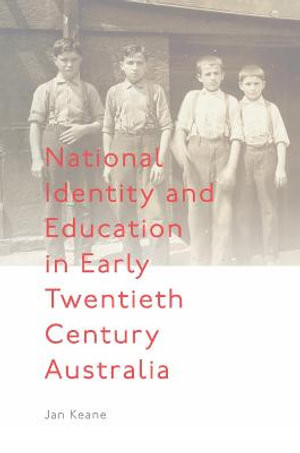
This fascinating book explores how curriculum content in education was used to cultivate a sense of Australian national identity during the first two decades of the twentieth century.
Providing a...
Combining concepts and methodologies from anthropology, history, linguistics, literature, music, cultural studies, and film studies, this collection of ten original essays addresses issues crucial to...