Trending Bestseller

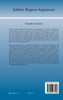
Infinite Regress

No reviews yet Write a Review
Paperback / softback
23-February-2001
262 Pages
$96.00
Ships in 3-5 business days
Hurry up! Current stock:
In Infinite Regress, David Joselit considers the plurality of identities and practices within Duchamp's life and art between 1910 and 1941, conducting a synthetic reading of his early and middle career.

There is not one Marcel Duchamp, but several. Within his oeuvre Duchamp practiced a variety of modernist idioms and invented an array of contradictory personas- artist and art dealer, conceptualist and craftsman, chess champion and dreamer, dandy and recluse. In Infinite Regress, David Joselit considers the plurality of identities and practices within Duchamp's life and art between 1910 and 1941, conducting a synthetic reading of his early and middle career. Taking into account underacknowledged works and focusing on the conjunction of the machine and the commodity in Duchamp's art, Joselit notes a consistent opposition between the material world and various forms of measurement, inscription, and quantification. Challenging conventional accounts, he describes the readymade strategy not merely as a rejection of painting, but as a means of producing new models of the modern self.

This product hasn't received any reviews yet. Be the first to review this product!

$96.00
Ships in 3-5 business days
Hurry up! Current stock:

Infinite Regress

$96.00

Description

In Infinite Regress, David Joselit considers the plurality of identities and practices within Duchamp's life and art between 1910 and 1941, conducting a synthetic reading of his early and middle career.

There is not one Marcel Duchamp, but several. Within his oeuvre Duchamp practiced a variety of modernist idioms and invented an array of contradictory personas- artist and art dealer, conceptualist and craftsman, chess champion and dreamer, dandy and recluse. In Infinite Regress, David Joselit considers the plurality of identities and practices within Duchamp's life and art between 1910 and 1941, conducting a synthetic reading of his early and middle career. Taking into account underacknowledged works and focusing on the conjunction of the machine and the commodity in Duchamp's art, Joselit notes a consistent opposition between the material world and various forms of measurement, inscription, and quantification. Challenging conventional accounts, he describes the readymade strategy not merely as a rejection of painting, but as a means of producing new models of the modern self.

Customers Also Viewed