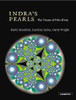
Felix Klein, one of the great nineteenth-century geometers, discovered in mathematics an idea prefigured in Buddhist mythology: the heaven of Indra contained a net of pearls, each of which was reflected in its neighbour, so that the whole Universe was mirrored in each pearl. Klein studied infinitely repeated reflections and was led to forms with multiple coexisting symmetries. For a century, these images barely existed outside the imagination of mathematicians. However, in the 1980s, the authors embarked on the first computer exploration of Klein's vision, and in doing so found many further extraordinary images. Join the authors on the path from basic mathematical ideas to the simple algorithms that create the delicate fractal filigrees, most of which have never appeared in print before. Beginners can follow the step-by-step instructions for writing programs that generate the images. Others can see how the images relate to ideas at the forefront of research.
In this clear, engaging book, Robin Robertson draws parallels between alchemy and chaos theory and shows how to apply them to our inner development. He is not proposing they replace traditional...
The story of Eko and Indra continues about two weeks after their last adventures in "The Perfect Season." Eko and Indra today are the world's most recognized people on Earth. The Young Men being 20...
Four men have been marked for death by the vengeful Hindu who earned the name of the Rajah from Hell. A serialized novel by the "King of the Pulps"-H. Bedford-Jones-which includes all of the original...
Details the textual and performative history of the South Asian festival of Indra and its role in the development of classical Hinduism.The Festival of Indra details the textual and performative...