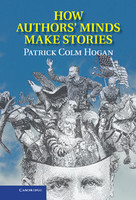
This book explores how the creations of great authors result from the same operations as our everyday counterfactual and hypothetical imaginations, which cognitive scientists refer to as 'simulations'. Drawing on detailed literary analyses as well as recent research in neuroscience and related fields, Patrick Colm Hogan develops a rigorous theory of the principles governing simulation that goes beyond any existing framework. He examines the functions and mechanisms of narrative imagination, with particular attention to the role of theory of mind, and relates this analysis to narrative universals. In the course of this theoretical discussion, Hogan explores works by Austen, Faulkner, Shakespeare, Racine, Brecht, Kafka and Calvino. He pays particular attention to the principles and parameters defining an author's narrative idiolect, examining the cognitive and emotional continuities that span an individual author's body of work.
We hate to tell you this (truly!), but writing is hard. Ok, we lied. It's not the writing that's hard, it's the becoming a successful author that's hard.We're authors; we get it. We've been in the...
An Author'S Mind : The Book Of Title-Pages ; ""A Bookful Of Books,"" Or ""Thirty Books In One"" has been considered by academicians and scholars of great significance and value to literature. This...
You have experience, knowledge, or wisdom inside you that simply MUSTcome out! You have been asking for a sign, looking for a structure, and thirsting for thepathway to share what you know... But...
This work has been selected by scholars as being culturally important, and is part of the knowledge base of civilization as we know it. This work was reproduced from the original artifact, and...