May we speak, in the present age, of holy scripture? And what validation of that claim can be offered, robust enough to hold good for both religious practice and intellectual enquiry? John Webster argues that while any understanding of scripture must subject it to proper textual and historical interrogation, it is necessary at the same time to acknowledge the special character of scriptural writing. His 2003 book is an exercise in Christian dogmatics, a loud reaffirmation of the triune God at the heart of a scripture-based Christianity. But it is written with intellectual rigour by a theologian who understands the currents of modern secular thought and is able to work from them towards a constructive position on biblical authority. It will resonate with anyone who has wondered or worried about the grounds on which we may validly regard the Bible as God's direct communication with humanity.
This work has been selected by scholars as being culturally important, and is part of the knowledge base of civilization as we know it.This work is in the "public domain in the United States of...
This work has been selected by scholars as being culturally important, and is part of the knowledge base of civilization as we know it. This work was reproduced from the original artifact, and...
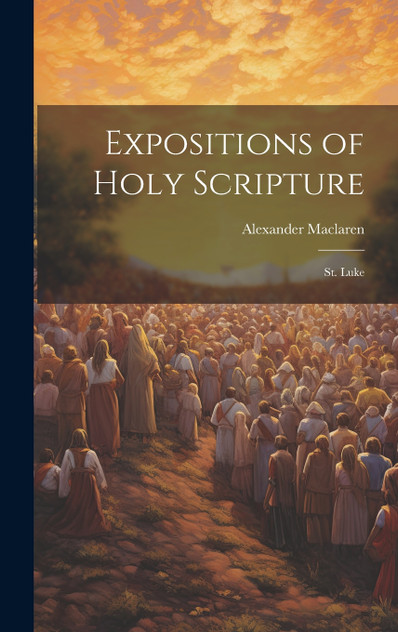
Published in 1901, this volume of sermons by Alexander Maclaren provides a detailed analysis of the Gospel of Luke, one of the four canonical gospels of the New Testament. Maclaren argues that Luke's...
This work has been selected by scholars as being culturally important, and is part of the knowledge base of civilization as we know it. This work was reproduced from the original artifact, and...