Trending Bestseller

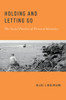
Holding and Letting Go

No reviews yet Write a Review
This book explores the social practice of holding each other in our identities, beginning with pregnancy and on through the life span. Lindemann argues that our identities give us our sense of how to act and how to treat others, and that the ways in which we we hold each other in them is of crucial moral importance.
Paperback / softback
09-February-2017
244 Pages
RRP: $101.95
$75.00
Ships in 5–7 business days
Hurry up! Current stock:
The social practice of forming, shaping, expressing, contesting, and maintaining personal identities makes human interaction, and therefore society, possible. Our identities give us our sense of how we are supposed to act and how we may or must treat others, so how we hold each other in our identities is of crucial moral importance. To hold someone in her identity is to treat her according to the stories one uses to make sense of who she is. Done well, holding allows individuals to flourish personally and in their interactions with others; done poorly, it diminishes their self-respect and restricts their participation in social life. If the identity is to represent accurately the person who bears it, the tissue of stories that constitute it must continue to change as the person grows and changes. Here, good holding is a matter of retaining the stories that still depict the person but letting go of the ones that no longer do. The book begins with a puzzling instance of personhood, where the work of holding someone in her identity is tragically one-sided. It then traces this work of holding and letting go over the human life span, paying special attention to its implications for bioethics. A pregnant woman starts to call her fetus into personhood. Children develop their moral agency as they learn to hold themselves and others in their identities. Ordinary adults hold and let go, sometimes well and sometimes badly. People bearing damaged or liminal identities leave others uncertain how to hold and what to let go. Identities are called into question at the end of life, and persist after the person has died. In all, the book offers a glimpse into a fascinating moral terrain that is ripe for philosophical exploration.

This product hasn't received any reviews yet. Be the first to review this product!

RRP: $101.95
$75.00
Ships in 5–7 business days
Hurry up! Current stock:

Holding and Letting Go

RRP: $101.95
$75.00

Description

The social practice of forming, shaping, expressing, contesting, and maintaining personal identities makes human interaction, and therefore society, possible. Our identities give us our sense of how we are supposed to act and how we may or must treat others, so how we hold each other in our identities is of crucial moral importance. To hold someone in her identity is to treat her according to the stories one uses to make sense of who she is. Done well, holding allows individuals to flourish personally and in their interactions with others; done poorly, it diminishes their self-respect and restricts their participation in social life. If the identity is to represent accurately the person who bears it, the tissue of stories that constitute it must continue to change as the person grows and changes. Here, good holding is a matter of retaining the stories that still depict the person but letting go of the ones that no longer do. The book begins with a puzzling instance of personhood, where the work of holding someone in her identity is tragically one-sided. It then traces this work of holding and letting go over the human life span, paying special attention to its implications for bioethics. A pregnant woman starts to call her fetus into personhood. Children develop their moral agency as they learn to hold themselves and others in their identities. Ordinary adults hold and let go, sometimes well and sometimes badly. People bearing damaged or liminal identities leave others uncertain how to hold and what to let go. Identities are called into question at the end of life, and persist after the person has died. In all, the book offers a glimpse into a fascinating moral terrain that is ripe for philosophical exploration.

Customers Also Viewed