Trending Bestseller

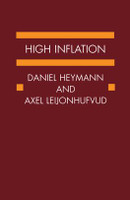
High Inflation

No reviews yet Write a Review
This book looks at how economies function in conditions of high inflation. It examines both theoretical issues - developing new theoretical models to understand the process of high and hyperinflations - and policy issues aimed at achieving stabilization.
Hardback
30-March-1995
RRP: $254.00
$196.00
Ships in 3-5 business days
Hurry up! Current stock:
This book looks at very high inflations, exemplified by those suffered by Argentina, Bolivia, Brazil, Israel, Mexico, and Peru in the eighties and by the Soviet Union today. The authors argue that a better grasp of high inflation processes is necessary in order for countries intricated in it to design stabilization strategies. The extremes of monetary instability can also give a clearer picture of the purpose that money and financial institutions serve under more normal circumstances, thus deepening our understanding of the benefits of monetary stability.The authors examine the financial problems that governments have to wrestle with in high inflation, the private sector's adaptations to high inflation conditions, and the difficulties of finding a policy strategy that can be sustained through disinflation to lasting stabilization.In describing, analysing, and explaining a number of high inflationary experiences, the authors show that standard macroeconomic theory cannot account for the phenomenon of these extreme cases and ask how received inflation theory needs to be changed in order for it to accommodate the various effects on the functioning of the economy.Finally, the authors make a series of policy prescriptions which will help policy-makers to avoid inflationary situations.

This product hasn't received any reviews yet. Be the first to review this product!

RRP: $254.00
$196.00
Ships in 3-5 business days
Hurry up! Current stock:

High Inflation

RRP: $254.00
$196.00

Description

This book looks at very high inflations, exemplified by those suffered by Argentina, Bolivia, Brazil, Israel, Mexico, and Peru in the eighties and by the Soviet Union today. The authors argue that a better grasp of high inflation processes is necessary in order for countries intricated in it to design stabilization strategies. The extremes of monetary instability can also give a clearer picture of the purpose that money and financial institutions serve under more normal circumstances, thus deepening our understanding of the benefits of monetary stability.The authors examine the financial problems that governments have to wrestle with in high inflation, the private sector's adaptations to high inflation conditions, and the difficulties of finding a policy strategy that can be sustained through disinflation to lasting stabilization.In describing, analysing, and explaining a number of high inflationary experiences, the authors show that standard macroeconomic theory cannot account for the phenomenon of these extreme cases and ask how received inflation theory needs to be changed in order for it to accommodate the various effects on the functioning of the economy.Finally, the authors make a series of policy prescriptions which will help policy-makers to avoid inflationary situations.
Customers Also Viewed