In Phenomenology of Spirit (1806) Hegel is often held to have announced the end of history, where 'history' is to be understood as the long pursuit of ends towards which humanity had always been striving. In this, the first book in English to thoroughly critique this entrenched view, Eric Michael Dale argues that it is a misinterpretation. Dale offers a reading of his own, showing how it sits within the larger schema of Hegel's thought and makes room for an understanding of the 'end of history' as Hegel intended. Through an elegant analysis of Hegel's philosophy of history, Dale guides the reader away from the common misinterpretation of the 'end of history' to other valuable elements of Hegel's arguments which are often overlooked and deserve to endure. His book will be of great interest to scholars and advanced students of Hegel, the philosophy of history, and the history of political thought.
This book is one of the most important recent books on Hegel, a philosopher who has had a crucial impact on the shape of continental philosophy. Published here in English for the first time, it...
Hegel and the Future of Systematic Philosophy critically rehabilitates Hegel's post-enlightenment project of doing systematic philosophy without foundations, showing how it can solve the dilemmas...
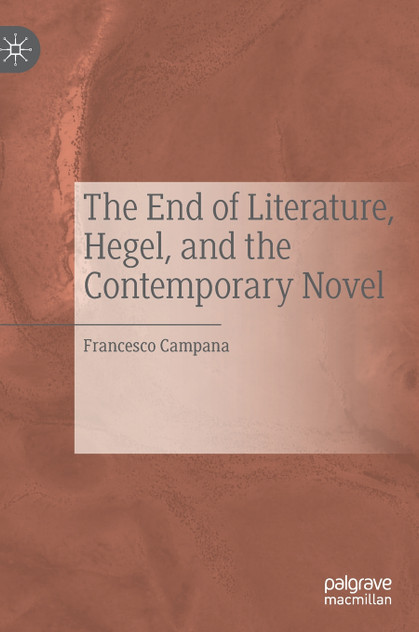
This book explores the concept of the end of literature through the lens of Hegel's philosophy of art. In his version of Hegel's 'end of art' thesis, Arthur Danto claimed that contemporary art...