

Diana Collecott proposes that Sappho's presence in H. D.'s work is as significant as that of Homer in Pound's and of Dante in Eliot's. She undertakes a radical revision of H. D.'s Hellenism and her Imagism, relating both to the literary and sexual politics of the First World War period. She then pursues H. D.'s career to the end of the Second World War, discovering en route important intertextualities with Swinburne, Wilde and Shakespeare. Connecting the fragmentary condition of Sappho's writings with the erasure of women within modernism and the silencing of lesbians in the wider culture, she traces the Sapphic in H .D.'s prose and poetry an in its modern contexts. Her exploration develops a lesbian poetics not only for H. D. but also for contemporaries such as Bryher, Amy Lowell and Virginia Woolf and for successors such as Audre Lorde, Adrienne Rich and Olga Broumas.
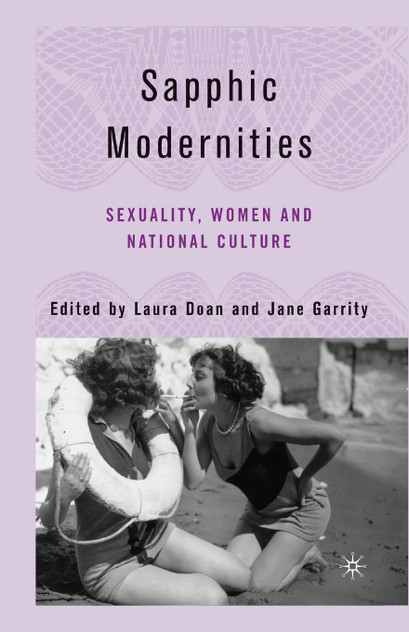
An examination of the representation of the lesbian in modernity from the multiple perspectives of literary, visual and cultural studies, this book shows how the sapphic figure, in her multiple and...
Novels by significant Modernist authors can be described as romans à clef, providing insight into restrictions governing the representation of female homosexuality in the early twentieth century...
In The Making and Unmaking of the English Catholic Intellectual Community, 1910-1950, James R. Lothian examines the engagement of interwar Catholic writers and artists both with modernity in general...