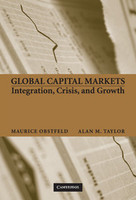
This book presents an economic survey of international capital mobility from the late nineteenth century to the present. The authors examine the theory and empirical evidence surrounding the fall and rise of integration in the world market. A discussion of institutional developments focuses on capital controls and the pursuit of macroeconomic policy objectives in shifting monetary regimes. The Great Depression emerges as the key turning point in recent history of international capital markets, and offers important insights for contemporary policy debates. Its principal legacy is that the return to a world of global capital is marked by great unevenness in outcomes regarding both risks and rewards of capital market integration. More than in the past, foreign investment flows largely from rich countries to other rich countries. Yet most financial crises afflict developing countries, with costs for everyone.
Inhaltsangabe:Abstract:Communication of global companies with the capital market is a very actual topic and becomes more and more important nowadays. A good communication is necessary for all...
The edited volume on "The Role of Institutional Investors in a Globalized Environment" will publish original papers that examine various issues concerning the strategies of institutional investors,...
Standardization and harmonization of accounting practices is a fundamental element of a global business environment. Achieving this is a complex process that involves technical and political...
This book unravels the complex mechanisms involved in global real estate capital markets. Designed not just for advanced real estate students, but also for global finance courses, Executive Education...