From the time of its composition (c.1280) for Philip the Fair of France until the early sixteenth century, Giles of Rome's mirror of princes, the De regimine principum, was read by both lay and clerical readers in the original Latin and in several vernacular translations, and served as model or source for several works of princely advice. This study examines the relationship between this didactic political text and its audience by focusing on the textual and material aspects of the surviving manuscript copies, as well as on the evidence of ownership and use found in them and in documentary and literary sources. Briggs argues that lay readers used De regimine for several purposes, including as an educational treatise and military manual, whereas clerics, who often first came into contact with it at university, glossed, constructed apparatus for, and modified the text to suit their needs in their later professional lives.
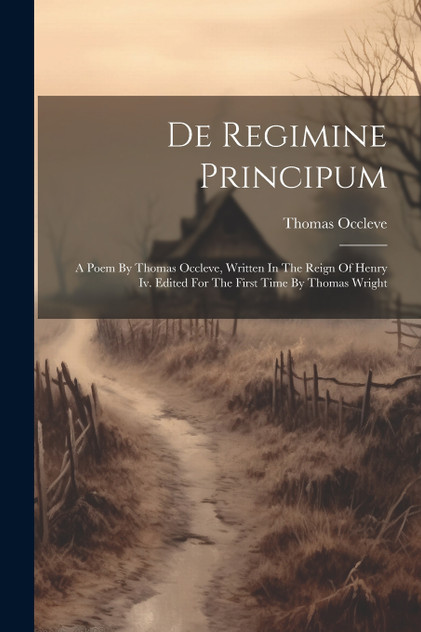
This newly edited poem offers insight into the political climate during the reign of Henry IV. Occleve's work critiques the ruling class and advocates for good governance, providing a unique...
On the Government of Rulers, a book that influenced much of the political thought of the later Middle Ages, the Renaissance, and the Early Modern period, is here translated into English in its...
Aegidii Romani De Regimine Principum Doctrina (1857), edita a Courdaveaux, Victor, est opus quod tractat de regimine principum. Auctor, Aegidius Romanus, qui vixit in saeculo XIII, docet principes...
Das Buch ""Der Aufsatz De Regimine Principum Von Thomas Von Aquino (1894)"" von Bosone, Casar August ist eine kritische Ausgabe des ber�����hmten Werks von Thomas von Aquin mit dem Titel ""De...
This is a reproduction of a book published before 1923. This book may have occasional imperfections such as missing or blurred pages, poor pictures, errant marks,...