When Charles Martin Hall patented the process for refining the metal in 1886, it was far from self-evident that the new technology would be a business success. Problems involving the technology had to be solved. Capital and a labour force were needed. The most pressing entrepreneurial dilemma was the need to develop markets for what was then a novelty product. George David Smith examines how Alcoa met these problems, with special attention to innovation, from Alcoa's beginnings through its development into one of the most successful monopolies in American history. By World War II, no other American corporation had developed its industry's markets more dramatically and then dominated them more completely. The book then analyzes the undoing of Alcoa's monopoly by war and antitrust, and examines how the firm adapted to evolving forms of oliogopolistic and global competition.
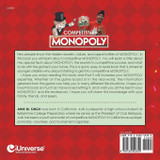
Few people know the hidden secrets, values, and opportunities of MONOPOLY. In this book you will learn about competitive MONOPOLY. You will learn a little about me, special facts about MONOPOLY, the...
This work has been selected by scholars as being culturally important, and is part of the knowledge base of civilization as we know it. This work was reproduced from the original artifact, and...
This title is part of UC Press's Voices Revived program, which commemorates University of California Press’s mission to seek out and cultivate the brightest minds and give them voice, reach, and...
Do the antitrust laws have a place in the digital economy or are they obsolete? That is the question raised by the government's legal action against Microsoft, and it is the question this volume is...
The Morals of Monopoly and Competition is a book written by Homer Blosser Reed and published in 1916. The book is a detailed exploration of the ethical implications of two economic systems - monopoly...