This study is a contribution to the debate, begun just after the October Revolution, concerning the relationship between Marx's project and Soviet society. It focuses, however, only on the political aspects of the matter: to what extent was early Soviet authoritarianism the necessary outcome of Marx's works? Since Lenin's practice and theory largely determined and justified the early political character of the Soviet state, we may ask whether Lenin was implementing Marx's project or a project of his own design. Lenin, influenced by debates within Social Democracy and by the experience of the Russian revolutionary tradition, used a one-sided interpretation of Marx's work to build and defend a 'transition' which was fundamentally authoritarian. Marx was not causally responsible for the theoretical foundation of Soviet authoritarianism.
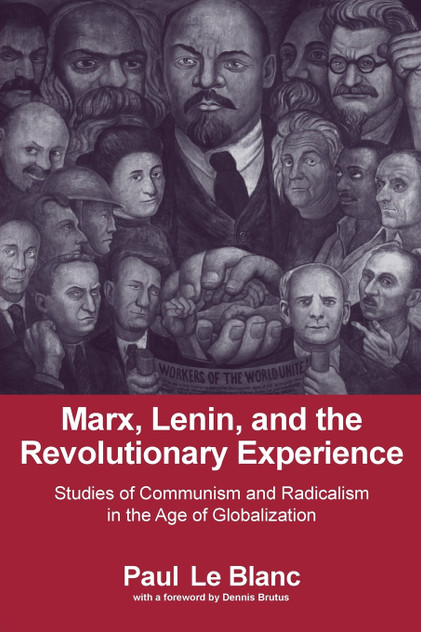
Marx, Lenin, and the Revolutionary Experience offers a fresh look at Communism, both the bad and good, and also touches on anarchism, Christian theory, conservatism, liberalism, Marxism, and more, to...
In the second installment of his "Death of the Ideology of Marx and Lenin" series, Communism Can't Be the Final Stage, author, Syed Ali re-criticizes the ideologies within Marxism and Lenism,...
In this book Seyed Ali Asghar Emadi Pahandari asserts that there are many contradictions in Marxism and Leninism and that socialism is far from commune. A communist society is against violence; thus,...
Basic Principles of the Marx Engels Lenin Institute Tasks of the Revolutionary Socialist Movement Worker-Community Organizations and the Duty of Cadres to Teach-Learn The Need for a Tactical Pedagogy...