In an age of revolution, Mexico's creole leaders held aloft the Virgin of Guadalupe and brandished an Aztec eagle perched upon a European tricolor. Their new constitution proclaimed 'the Mexican nation is forever free and independent'. Yet the genealogy of this new nation is not easy to trace. Colonial Mexico was a patchwork state whose new-world vassals served the crown, extended the empire's frontiers and lived out their civic lives in parallel Spanish and Indian republics. Theirs was a world of complex intercultural alliances, interlocking corporate structures and shared spiritual and temporal ambitions. Sean F. McEnroe describes this history at the greatest and smallest geographical scales, reconsidering what it meant to be an Indian vassal, nobleman, soldier or citizen over three centuries in northeastern Mexico. He argues that the Mexican municipality, state and citizen were not so much the sudden creations of a revolutionary age as the progeny of a mature multiethnic empire.
Drawing on previously unavailable archival material, this book argues that Indonesian nationalism rested on Islamic ecumenism heightened by colonial rule and the pilgrimage. The award...
Drawing on an analysis of issues surrounding the consumption of alcohol in a diverse range of source materials, including novels, newspapers, medical texts, and archival records, this lively and...
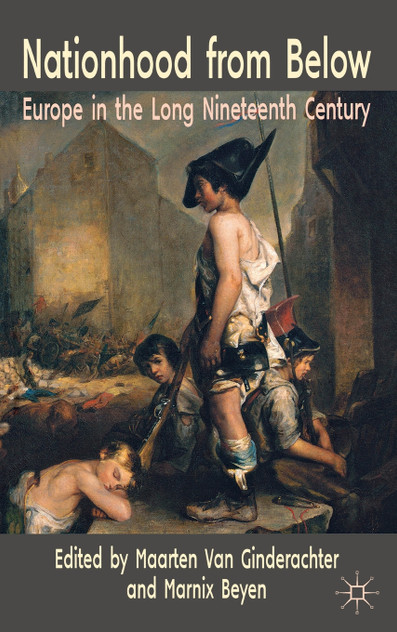
Nationalism was ubiquitous in nineteenth-century Europe. Yet, we know little about what the nation meant to ordinary people. In this book, both renowned historians and younger scholars try to answer...
As Canada came to terms with its role as an independent nation following Confederation in 1867, there was a call for a literary voice to express the needs and desires of a new country. Children's...
Sierra Leone was granted full status as an independent member country of the British Commonwealth on 26 April 1961. In April 1971 it became a Republican State. As it celebrated 50 years of life as an...