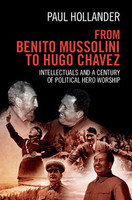
During the twentieth and twenty-first centuries, political dictators were not only popular in their own countries, but were also admired by numerous highly educated and idealistic Western intellectuals. The objects of this political hero-worship included Benito Mussolini, Adolph Hitler, Joseph Stalin, Mao Zedong, Fidel Castro and more recently Hugo Chavez, among others. This book seeks to understand the sources of these misjudgements and misperceptions, the specific appeals of particular dictators, and the part played by their charisma, or pseudo-charisma. It sheds new light not only on the political disposition of numerous Western intellectuals - such as Martin Heidegger, Eric Hobsbawm, Norman Mailer, Ezra Pound, Susan Sontag and George Bernard Shaw - but also on the personality of those political leaders who encouraged, and in some instances helped to design, the cult surrounding their rise to dictatorship.
La Società Tipografica Editoriale Porta di Piacenza diede alle stampe negli anni Venti del secolo scorso una serie di volumetti, singoli o doppi, che tracciavano i profili degli "Artefici della...
Il volume offre uno studio del linguaggio di Benito Mussolini. L'intera analisi è interpretata alla luce della retorica classica di Aristotele. L'autrice - in cerca di strategie persuasive e...
Studienarbeit aus dem Jahr 2007 im Fachbereich Geschichte Europa - and. Länder - Neueste Geschichte, Europäische Einigung, Note: 2,3, Rheinische Friedrich-Wilhelms-Universität Bonn (Historisches...
When Hugo Chavez, then President of Venezuela, died in 2013, millions across the globe mourned. In an age where most politicians inspire only apathy and cynicism, Chavez's popularity, radicalism and...