France had the second largest empire in the world after Britain, but one with very different origins and purposes. Over more than four centuries, the French empire explained itself in many different ways through many different colonial regimes. Beginning in the early modern period, a vast mercantile empire based on furs and fish in the New World and sugar cultivated by the enslaved in the Caribbean rose and fell. At intervals thereafter, the French seemed to have an empire simply as an attribute of a Great Power, generally in competition with Britain. Relatively few French people ever moved to the empire, even to the settler colony of Algeria. Under the Third Republic, the French construed a "civilizing mission" melding selectively applied principles of democracy and colonial capitalism. Two world wars and two anticolonial wars broke French imperial power as it had previously existed, yet numberless traces of the French empire lived on, both in the former colonies and in today's French Republic. This narrative history recounts the unique course of the French empire, questioning how it made sense to the people who ruled it, lived under it, and fought against it.
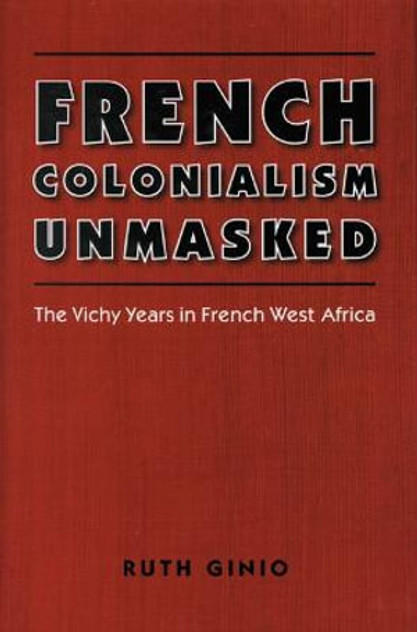
Before the Vichy regime, there was ostensibly only one France and one form of colonialism for French West Africa (FWA). World War II and the division of France into two ideological camps, each asking...
This volume explores the planning and architectural cultures that shaped the model space of French colonial Dakar, a prominent city in West Africa. With a focus on the period from the establishment...
French Colonial Documentary investigates how the promise of universal citizenship rights in France was projected onto the colonies as a form of evolutionary interventionism. Bloom focuses on the...
This work has been selected by scholars as being culturally important, and is part of the knowledge base of civilization as we know it. This work was reproduced from the original artifact, and...