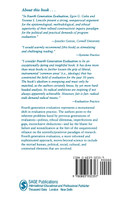
Fourth generation evaluation represents a monumental shift in evaluation practice. The authors of this book point to the inherent problems faced by previous generations of evaluators - politics, ethical dilemmas, fuzzy data, inconclusive conclusions - and lay the blame for failure and non-utilization at the feet of the unquestioned reliance on the scientific/positivist paradigm of research. They show how fourth generation evaluation - based on relativism and qualititative methodology - solves the persistent problems in programme evaluation. The text contains a description of the differences between the positivist and constructivist paradigms of research, and provides a practical plan of the steps and processes in conducting a fourth generation evaluation.