Why do governments tolerate the violation of their own laws and regulations? Conventional wisdom is that governments cannot enforce their laws. Forbearance as Redistribution challenges the standard interpretation by showing that politicians choose not to enforce laws to distribute resources and win elections. Alisha Holland demonstrates that this forbearance towards activities such as squatting and street vending is a powerful strategy for attracting the electoral support of poor voters. In many developing countries, state social programs are small or poorly targeted and thus do not offer politicians an effective means to mobilize the poor. In contrast, forbearance constitutes an informal welfare policy around which Holland argues much of urban politics turns. While forbearance offers social support to those failed by their governments, it also perpetuates the same exclusionary welfare policies from which it grows.
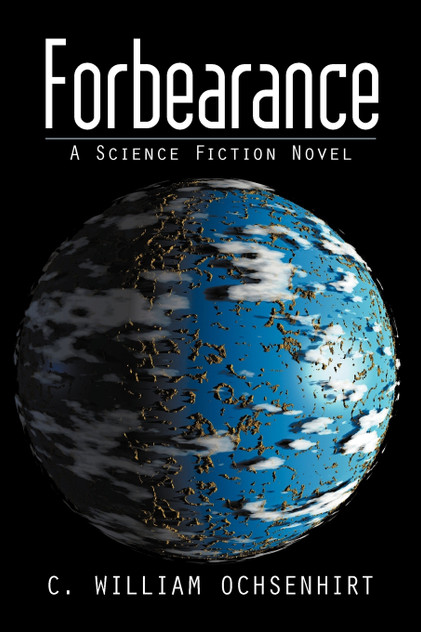
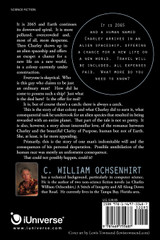
It is 2065 and Earth continues its downward spiral. It is more polluted, overcrowded and, most of all, more desperate. Then Charley shows up in an alien spaceship and offers an escape: a chance for...
After eleven hundred years of struggle, the warring tribes that survived the apocalyptic destruction of the United States have finally united, forming the peaceful Heart River Federation. But three...
Bear and Forbear: Or The Young Skipper of Lake Ucayga is a novel written by Oliver Optic and published in 1874. The story follows the adventures of a young man named Paul Duncan, who inherits a boat...