
Well known among his contemporaries for his unrivalled knowledge of aberrant plants, Daniel Oliver (1830-1916) ran the herbarium at Kew Gardens and held the chair of botany at University College London, for which he was recommended by Charles Darwin. Although Oliver never visited India, his expertise in Indian botany grew considerably after he worked with an enormous number of dried specimens rescued from the cellars of the East India Company. In this book, first published in 1869, he sets out the basics of botanical study in India for the absolute beginner. It includes instruction on the anatomy of simple plants, lessons in collection and dissection, and explanations of botany's often dense terminology. Annotated diagrams appear throughout, in both microscopic and macroscopic views. Rigorous and carefully structured, Oliver's book remains an excellent resource for novice botanists and students in the history of science.
The ""First Book of Botany"" by John Hutton Balfour is a comprehensive introduction to the study of the anatomy and physiology of plants, specifically designed for beginners. Originally published in...
The First Book of Botany is an accessible introduction to the world of plants and botany. The author explains the basic principles of plant anatomy, physiology, and taxonomy, using clear language and...
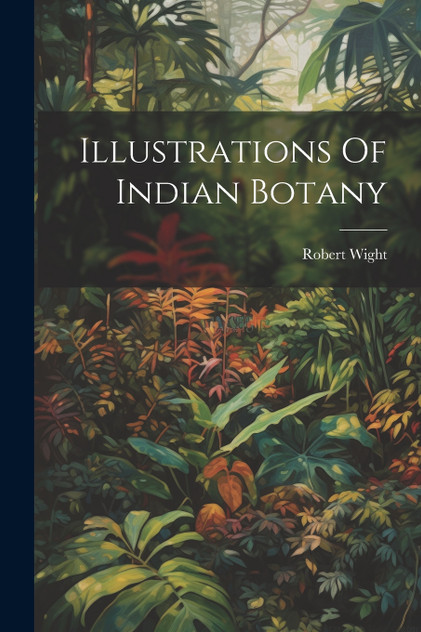
Robert Wight provides a stunning visual record of the flora of India, with over 200 illustrations of plants and flowers. This book is an essential resource for botanists, as well as anyone interested...
This work has been selected by scholars as being culturally important, and is part of the knowledge base of civilization as we know it. This work was reproduced from the original artifact, and...
Many of the earliest books, particularly those dating back to the 1900s and before, are now extremely scarce and increasingly expensive. We are republishing these classic works in affordable, high...