This book argues against the legalisation of voluntary euthanasia and/or physician-assisted suicide on the ground that, even if they were ethically defensible in certain 'hard cases', neither could be effectively controlled by law. It maintains that the experience of legalisation in the Netherlands, Belgium and Oregon lends support to the two 'slippery slope' arguments against legalisation, the 'empirical' and the 'logical'. The empirical argument challenges the feasibility of drafting and enforcing adequate safeguards against abuse and mistake; the logical argument shows that acceptance of the case for euthanasia in the case of suffering patients who request it logically involves acceptance of euthanasia for suffering patients who are unable to request it, such as infants and those with advanced dementia.
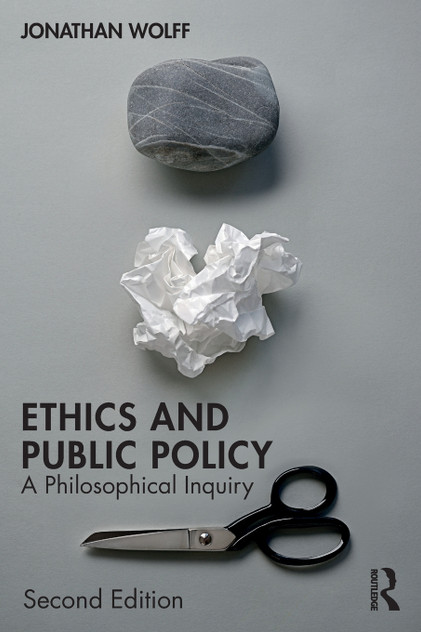
Ethics and Public Policy: A Philosophical Inquiry, second edition subjects important and controversial areas of public policy to philosophical scrutiny. Jonathan Wolff, a renowned philosopher and...
Life has always been understood as the intrinsic principle for all human values, and therefore, it is unethical to intentionally terminate an innocent human life. However, the current biomedical...
Ethics in Public Policy and Management: A global research companion showcases the latest research from established and newly emerging scholars in the fields of public management and ethics. This...
What makes a policy work? What should policies attempt to do, and what ought they not do? These questions are at the heart of both policy-making and ethics. Philosophy, Ethics and Public Policy: An...