

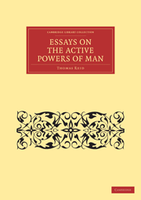


Essays on the active powers of man. By Thomas Reid, ...
The 18th century was a wealth of knowledge, exploration and rapidly growing technology and expanding record-keeping made possible by advances in the printing press. In its...
$55.00

![Essays On the Powers of the Human Mind [Orig. Publ. As Essays On the Intellectual Powers of Man and Essays On the Active Powers of Man]. to Which Are Added, an Essay On Quantity, and an Analysis of Aristotle's Logic](https://cdn11.bigcommerce.com/s-mhoxselkat/images/stencil/500x632/products/1693996/2382417/5537052-1016212860__59799.1736898292.jpg?c=1 "Essays On the Powers of the Human Mind [Orig. Publ. As Essays On the Intellectual Powers of Man and Essays On the Active Powers of Man]. to Which Are Added, an Essay On Quantity, and an Analysis of Aristotle's Logic")
![Essays On the Powers of the Human Mind [Orig. Publ. As Essays On the Intellectual Powers of Man and Essays On the Active Powers of Man]. to Which Are Added, an Essay On Quantity, and an Analysis of Aristotle's Logic](https://cdn11.bigcommerce.com/s-mhoxselkat/images/stencil/160w/products/1693996/2382976/5537053-1016212860__10947.1736898332.jpg?c=1 "Essays On the Powers of the Human Mind [Orig. Publ. As Essays On the Intellectual Powers of Man and Essays On the Active Powers of Man]. to Which Are Added, an Essay On Quantity, and an Analysis of Aristotle's Logic")

