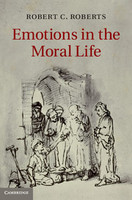
Robert C. Roberts first presented his vivid account of emotions as 'concern-based construals' in his book Emotions: An Essay in Aid of Moral Psychology (Cambridge, 2003). In this new book he extends that account to the moral life. He explores the ways in which emotions can be a basis for moral judgments, how they account for the deeper moral identity of actions we perform, how they are constitutive of morally toned personal relationships like friendship, enmity, collegiality and parenthood, and how pleasant and unpleasant emotions interact with our personal wellbeing (eudaimonia). He then sketches how, by means of their moral dimensions, emotions participate in our virtues and vices, and for better or worse, express our moral character. His rich study will interest a wide range of readers working on virtue ethics, moral psychology and emotion theory.
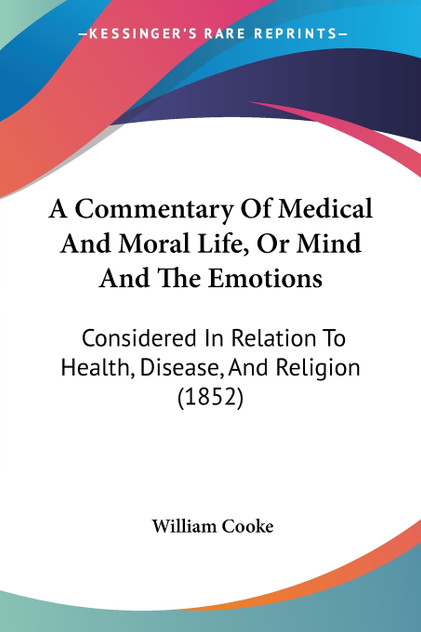
""A Commentary of Medical and Moral Life, or Mind and the Emotions: Considered in Relation to Health, Disease, and Religion"" is a book written by William Cooke and published in 1852. The book...
Emotions shape our mental and social lives. Their relation to morality is, however, problematic. Since ancient times, philosophers have disagreed about the place of emotions in morality. One the one...
The author presents a new philosophical theory according to which we need intuitions and emotions in order to have objective moral knowledge, which is called affectual intuitionism. Affectual...
This collection of essays presents Jeffrie G. Murphy's most recent ideas on punishment, forgiveness, and the emotions of resentment, shame, guilt, remorse, love, and jealousy. In Murphy's view,...