Trending Bestseller

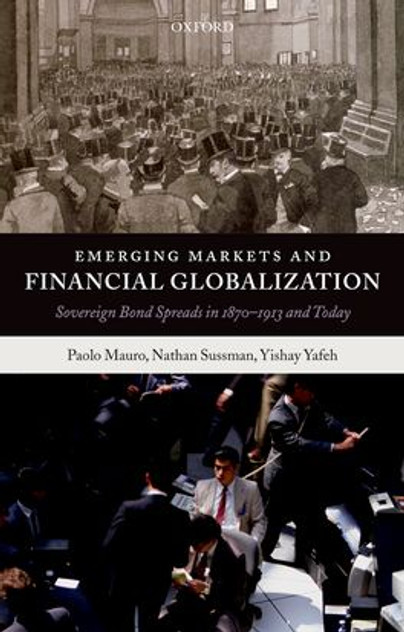
Emerging Markets an Financial Globalization

No reviews yet Write a Review
The frequency and virulence of recent financial crises have led to calls for reform of the current international financial architecture. To learn more about today's international financial environment, the authors turn to an earlier era of financial globalization between 1870 and 1913 to help us understand the characteristics of global crises.
Hardback
01-May-2006
$180.00
Ships in 5–7 business days
Hurry up! Current stock:
The frequency and virulence of recent financial crises have led to calls for reform of the current international financial architecture. In an effort to learn more about today's international financial environment, the authors turn to an earlier era of financial globalization between 1870 and 1913. By examining data on sovereign bonds issued by borrowing developing countries in this earlier period and in the present day, the authors are able to identify the characteristics of successful borrowers in the two periods. They are then able to show that global crises or contagion are a feature of the 1990s which was hardly known in the previous era of globalization. Finally, the authors draw lessons for today from archival data on mechanisms used by British investors in the 19th century to address sovereign defaults. Using new qualitative and quantitative data, the authors skilfully apply a variety of approaches in order to better understand how problems of volatility and debt crises are dealt with in international financial markets.

This product hasn't received any reviews yet. Be the first to review this product!

$180.00
Ships in 5–7 business days
Hurry up! Current stock:

Emerging Markets an Financial Globalization

$180.00

Description

The frequency and virulence of recent financial crises have led to calls for reform of the current international financial architecture. In an effort to learn more about today's international financial environment, the authors turn to an earlier era of financial globalization between 1870 and 1913. By examining data on sovereign bonds issued by borrowing developing countries in this earlier period and in the present day, the authors are able to identify the characteristics of successful borrowers in the two periods. They are then able to show that global crises or contagion are a feature of the 1990s which was hardly known in the previous era of globalization. Finally, the authors draw lessons for today from archival data on mechanisms used by British investors in the 19th century to address sovereign defaults. Using new qualitative and quantitative data, the authors skilfully apply a variety of approaches in order to better understand how problems of volatility and debt crises are dealt with in international financial markets.

Customers Also Viewed