Education and the Creation of Capital in the Early American Republic
This book argues that schools were a driving force in the formation of social, political, and financial capital during the market revolution and capitalist transition of the early republican era. Grounded in an intensive study of schooling in the Genesee Valley region of upstate New York, it traces early sources of funding and support for education (including common schools and various forms of higher schooling) to their roots in different social and economic networks and trade and credit relations. It then interprets that story in the context of other major developments in early American social, political, and economic history, such as the shift from agricultural to non-agricultural production, the integration of rural economies into translocal capitalist markets, the organization of the Second Great Awakening, the transformation of patriarchy, the expansion of white male suffrage, the emergence of the Secondary American Party System, and the formation of the modern liberal state.
THE EARLY AMERICAN REPUBLIC UNCOVERING THE PAST: DOCUMENTARY READERS IN AMERICAN HISTORY ?Selected with imagination and wisdom, these incisive and wide-ranging texts will provide a ?road map? for...
One of leading figures of his day, Roger Sherman was a member of the five-man committee that drafted the Declaration of Independence and an influential delegate at the Constitutional Convention. As a...
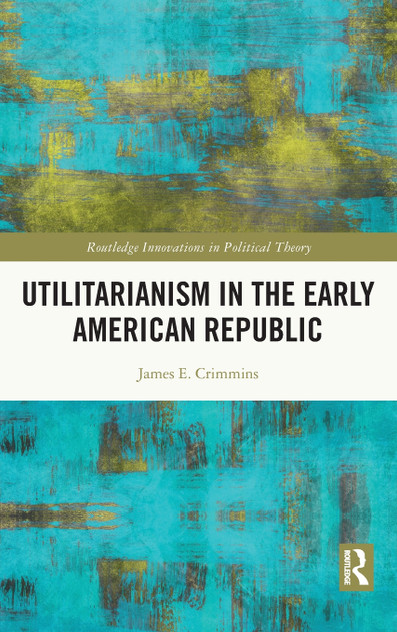
In Utilitarianism in the Early American Republic James E. Crimmins provides a fresh perspective on the history of antebellum American political thought.Based on a broad-ranging study of the...