This pioneering study of Burke's engagement with Irish politics and culture argues that Burke's influential early writings on aesthetics are intimately connected to his lifelong political concerns. The concept of the sublime, which lay at the heart of his aesthetics, addressed itself primarily to the experience of terror, and it is this spectre that haunts Burke's political imagination throughout his career. Luke Gibbons argues that this found expression in his preoccupation with political terror, whether in colonial Ireland and India, or revolutionary America and France. Burke's preoccupation with violence, sympathy and pain allowed him to explore the dark side of the Enlightenment, but from a position no less committed to the plight of the oppressed, and to political emancipation. This major reassessment of a key political and cultural figure will appeal to Irish studies and Post-Colonial specialists, political theorists and Romanticists.
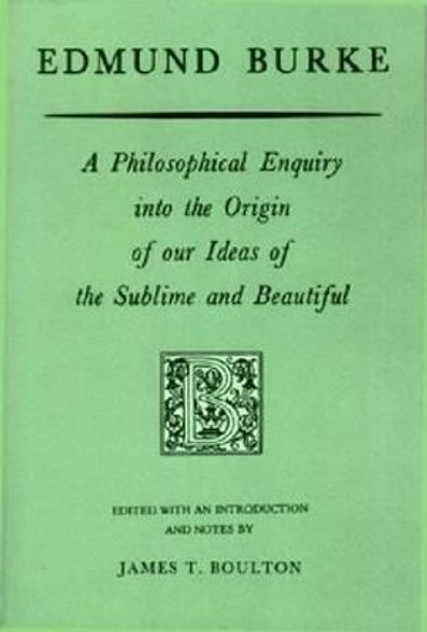
In his Enquiry--which has been described as "certainly one of the most important aesthetic documents that eighteenth -century England produced"--the young Burke provided a systematic analysis of the...
This book offers an examination of responses to Edmund Burke from the last decades of the eighteenth century to the present day, ending with the question whether there is still a role for him to play...
Gain insight into the intellectual life of Edmund Burke with Sir James Prior's absorbing biography. Burke was a statesman and political theorist during the 18th century whose work had a profound...
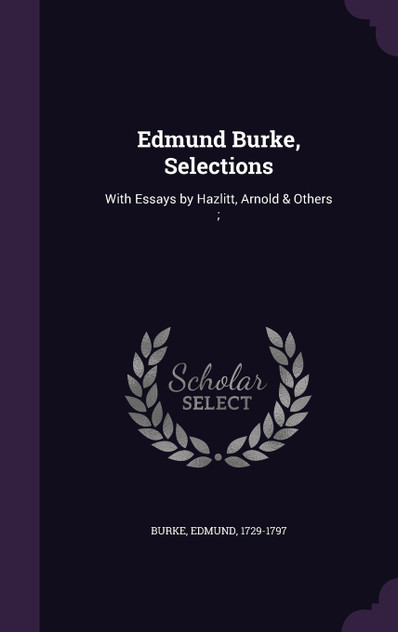
This work has been selected by scholars as being culturally important, and is part of the knowledge base of civilization as we know it. This work was reproduced from the original artifact, and...
The most recent commentators on Edmund Burke have renewed the charge that his political thought lacks the consistency and coherency necessary to even claim the status of a political philosophy and...