Trending Bestseller

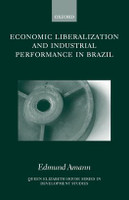
Economic Liberalization and Industrial Performance in Brazil

No reviews yet Write a Review
This book examines the impact of economic liberalization on an advanced industrial sector in Latin America's largest economy. Using a comprehensive variety of original sources, the complex reactions to policy changes are analysed and their wider implications for industrial performance and technological self-reliance highlighted. While liberalization undoubtedly helped to promote greater efficiency in some areas of corporate performance, the impact elsewhere was less favourable. This differentiated response raises some interesting and troubling theoretical and policy issues.

Hardback
24-August-2000
308 Pages
$390.00
Ships in 3-5 business days
Hurry up! Current stock:
In the past ten years the Brazilian economy has experience an unprecedented wave of market liberalization as import substitution has been progressively abandoned in favour of integration into the global economy. Trade barriers have fallen, privatizations have been implemented, and government procurement has been cut back. Although these policy shifts will be familiar to many, their implications in terms of performance may not.Using a comprehensive array of primary and secondary sources and in-depth company case studies, this book examines how one vitally important Brazilian industrial sector-the non-serial capital goods sector-coped with the onset of liberalization. While liberalization undoubtedly helped to promote greater efficiency in some areas of corporate performance, the impact elsewhere was far less favourable. This differentiated response raises some interesting and troubling theoretical and policy issues.

This product hasn't received any reviews yet. Be the first to review this product!

$390.00
Ships in 3-5 business days
Hurry up! Current stock:

Economic Liberalization and Industrial Performance in Brazil

$390.00

Description

In the past ten years the Brazilian economy has experience an unprecedented wave of market liberalization as import substitution has been progressively abandoned in favour of integration into the global economy. Trade barriers have fallen, privatizations have been implemented, and government procurement has been cut back. Although these policy shifts will be familiar to many, their implications in terms of performance may not.Using a comprehensive array of primary and secondary sources and in-depth company case studies, this book examines how one vitally important Brazilian industrial sector-the non-serial capital goods sector-coped with the onset of liberalization. While liberalization undoubtedly helped to promote greater efficiency in some areas of corporate performance, the impact elsewhere was far less favourable. This differentiated response raises some interesting and troubling theoretical and policy issues.

Customers Also Viewed