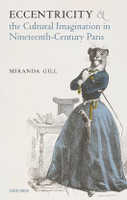
Miranda Gill asks what it meant to call someone 'eccentric' in nineteenth-century Paris, and examines why breaking with convention gave rise to such ambivalent responses. From high society to Bohemia and the demi-monde to the madhouse, the scandal of standing out provoked anxiety, disgust, and often secret yearning, becoming intimately linked to middle-class identity. This interdisciplinary study charts French perceptions of the anomalous and bizarre from the
1830s to the fin de siècle, as they mutated in response to social upheavals and artistic and scientific innovations. Drawing on a wide range of sources, including etiquette manuals, fashion magazines,
newspapers, novels, and psychiatric treatises, the study emphasises the central role of gender in shaping perceptions of eccentricity. It provides new readings of works by major French writers including Baudelaire, Nerval, and Vallès, and illuminates both well-known and neglected figures of Parisian modernity, from the courtesan and Bohemian to the female dandy and circus freak.